Alloy 20 Welding Electrodes
- Home
- /
- alloy + consumable type
- /
- Alloy 20 Welding Products
- /
- Alloy 20 Welding Electrodes
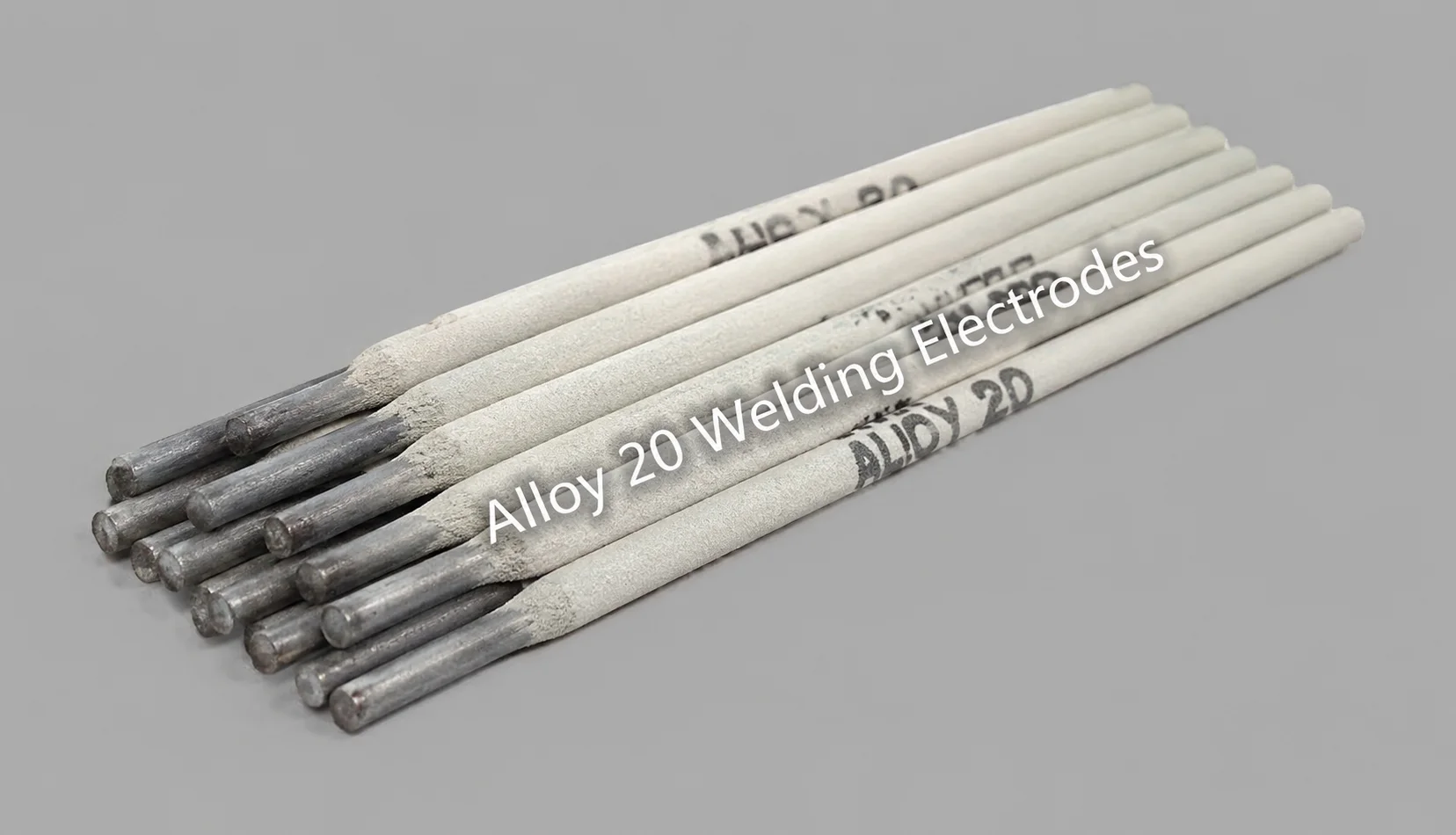
| Parameter | Details |
|---|---|
| Product Name | Alloy 20 Welding Electrodes |
| Alloy | Alloy 20 / Carpenter 20 |
| UNS Base Metal | N08020 |
| Material Number | W.Nr. 2.4660 |
| Electrode Classification | ENiCrMo-3 |
| AWS Standard | AWS A5.11 |
| ASME Standard | ASME SFA 5.11 |
| Electrode Type | Nickel Alloy Covered Electrode |
| Welding Process | SMAW / MMA |
| Polarity | DCEP / DC+ |
| Core Material | Nickel-Iron-Chromium Alloy |
| Coating | Specially formulated flux coating |
| F-Number | F-43 |
| Welding Positions | All positions with appropriate electrode sizes |
| Base Materials | Alloy 20 and compatible nickel/stainless alloys |
| Supply Form | Straight coated electrodes |
| Surface | Flux coated |
| Main Benefit | Strong resistance to aggressive chemical corrosion |
| Certification | MTC / Certificate of Conformance available |
Chemical Composition
| Element | Composition |
|---|---|
| Nickel (Ni) | 32.0–38.0% |
| Chromium (Cr) | 19.0–21.0% |
| Iron (Fe) | Balance |
| Molybdenum (Mo) | 2.0–3.0% |
| Copper (Cu) | 3.0–4.0% |
| Manganese (Mn) | 2.0% max. |
| Silicon (Si) | 1.0% max. |
| Carbon (C) | 0.07% max. |
| Niobium (Nb) | 8 × C minimum |
| Sulfur (S) | 0.035% max. |
| Phosphorus (P) | 0.035% max. |
Standard Electrode Sizes & Current Range
| Electrode Diameter | Inch Equivalent | Typical DCEP Current |
|---|---|---|
| 2.5 mm | 3/32″ | 50–80 A |
| 3.2 mm | 1/8″ | 75–110 A |
| 4.0 mm | 5/32″ | 100–145 A |
| 5.0 mm | 3/16″ | 130–180 A |
Mechanical & Quality Details
| Property / Feature | Details |
|---|---|
| Weld Deposit | Nickel-Chromium-Molybdenum alloy |
| Weld Condition | As-welded |
| Tensile Strength | Classification/manufacturer dependent |
| Arc Characteristics | Smooth and stable |
| Slag Removal | Designed for convenient removal |
| Welding Position | All-position options depending on size |
| Heat Input | Controlled according to qualified procedure |
| Joint Preparation | Clean and free from oil, grease and oxides |
| Interpass Control | According to approved WPS |
| Visual Inspection | Surface and workmanship inspection |
| Dimensional Inspection | Diameter and length verification |
| Chemical Analysis | Heat/lot testing as applicable |
| Certification | MTC / Certificate of Conformance |
| Traceability | Heat and batch identification |
| Packaging | Moisture-protected industrial packaging |
| Custom Supply | Sizes and packaging according to requirement |
Alloy 20 Electrode vs Filler Wire
| Feature | Welding Electrode | Filler Wire / Rod |
|---|---|---|
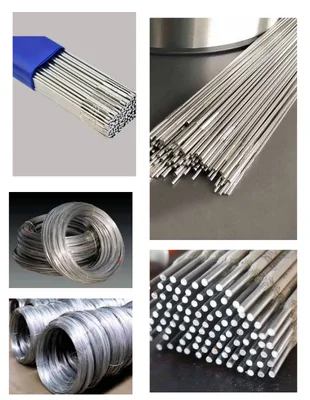
| Form | Flux-coated | Bare wire / rod |
| Main Process | SMAW / MMA | GTAW / GMAW |
| AWS Specification | A5.11 | A5.14 |
| Electrode Classification | ENiCrMo-3 | Alloy-specific ERNi classification |
| Flux | Yes | No |
| Supply | Straight electrodes | Spool / coil / straight rods |
| Typical Application | Manual arc welding | TIG/MIG welding |
Why Should You Buy Alloy 20 Welding Electrodes from Metalx Nickel & Alloys?
- Experienced Alloy Supplier – METALX NICKEL & ALLOYS specializes in nickel alloys, welding consumables and corrosion-resistant industrial materials.
- 20+ Years of Alloy Industry Experience – Extensive industry experience supports demanding alloy procurement and project requirements.
- Alloy 20 Expertise – Strong product knowledge covering Alloy 20 / Carpenter 20 and its corrosion-resistant applications.
- Correct Grade Identification – Products are specified as Alloy 20, UNS N08020 and Werkstoff 2.4660.
- Acid-Service Expertise – Suitable supply support for sulfuric acid and aggressive chemical-processing applications.
- Multiple Electrode Diameters – Different electrode sizes can be sourced according to welding requirements.
- Standard & Custom Lengths – Electrode lengths can be supplied according to standard availability or customer requirements.
- SMAW Compatibility – Suitable electrodes can be supplied for manual arc welding applications.
- AWS/ASME Specification Support – Products can be supplied according to applicable AWS A5.11 / ASME SFA-5.11 requirements.
- Grade-Specific Supply – Consumables can be coordinated according to the Alloy 20 base material and welding application.
- Chemical Composition Verification – Chemical testing can be arranged according to applicable specifications.
- Mechanical Testing – Applicable mechanical testing can be coordinated according to project requirements.
- Dimensional Inspection – Electrode dimensions can be checked against purchase specifications.
- Visual Inspection – Electrodes can be inspected for coating condition and general product quality.
- PMI Support – Positive Material Identification can be arranged where required.
- Mill Test Certificate – MTC can be provided according to customer and project requirements.
- EN 10204 Documentation – EN 10204 3.1 or 3.2 documentation can be arranged where specified.
- Third-Party Inspection – Independent inspection can be coordinated for qualifying projects.
- Batch Traceability – Heat and batch information can be maintained for applicable orders.
- Customized Orders – Diameter, length, quantity, testing, documentation and packaging can be customized subject to feasibility.
- Moisture-Protected Packaging – Electrodes can be packed to help protect them against moisture and contamination.
- Export-Quality Packing – Packaging can be prepared for domestic as well as international shipments.
- Global Export Supply – Supply can be arranged for customers in the UAE, Saudi Arabia, Qatar, Oman, Africa, Singapore, Europe and other international markets.
- Competitive Pricing – Commercially competitive quotations can be offered for standard and project-specific requirements.
- Bulk Order Support – Suitable for industrial projects, plant maintenance and larger procurement requirements.
- Technical Assistance – Basic product and specification support can be provided according to customer requirements.
- Project Documentation Support – Quality and inspection documentation can be coordinated for project orders.
- International Logistics Coordination – Shipment and export documentation support can be arranged for overseas orders.
- Reliable Supply Coordination – Repeat orders can be managed with attention to grade, dimensions, documentation and packaging consistency.
Key Features of Alloy 20 Welding Electrodes
- Alloy 20 Grade – Specifically designed for welding compatible Alloy 20 components used in aggressive chemical and acid-service environments.
- Carpenter 20 – Also known as Carpenter 20, a specialized corrosion-resistant nickel-iron-chromium alloy.
- UNS N08020 – Supplied according to the recognized UNS designation for Alloy 20.
- Werkstoff 2.4660 – Common European material designation associated with Alloy 20.
- Nickel-Iron-Chromium Base – Provides a balanced alloy composition for demanding corrosion-resistant applications.
- Molybdenum Addition – Molybdenum improves resistance to pitting and crevice corrosion.
- Copper Addition – Copper contributes significantly to resistance against sulfuric acid and selected reducing environments.
- Columbium Stabilization – Columbium/niobium stabilization helps reduce susceptibility to intergranular corrosion after welding.
- Excellent Sulfuric Acid Resistance – Alloy 20 is particularly valued for sulfuric acid service under suitable operating conditions.
- Strong Chemical Resistance – Suitable for equipment exposed to various aggressive chemical process streams.
- Pitting Resistance – Molybdenum-containing chemistry provides improved resistance to localized pitting.
- Crevice Corrosion Resistance – Suitable for applications where corrosion can develop in confined areas.
- Stress Corrosion Cracking Resistance – Offers good resistance to stress corrosion cracking in suitable chemical environments.
- Chloride Environment Performance – Provides useful resistance in many chloride-containing conditions.
- Oxidizing Environment Suitability – Chromium contributes to corrosion resistance in appropriate oxidizing environments.
- Reducing Environment Performance – Nickel and copper contribute to performance in selected reducing chemical conditions.
- SMAW Compatibility – Designed for Shielded Metal Arc Welding applications.
- Stable Arc Characteristics – Properly selected electrodes support controlled arc performance during manual welding.
- Controlled Weld Deposition – Helps provide consistent weld-metal deposition for fabrication and repair operations.
- Corrosion-Resistant Weld Metal – Suitable filler selection provides compatible corrosion-resistant weld deposits for Alloy 20 components.
- Good Fabrication Support – Suitable for welding, fabrication and repair when used according to a qualified welding procedure.
- Chemical Processing Applications – Ideal for compatible tanks, piping, vessels and equipment used in chemical processing.
- Sulfuric Acid Plant Applications – Suitable for fabrication and repair of equipment handling sulfuric acid.
- Pharmaceutical Industry Use – Applicable to compatible corrosion-resistant pharmaceutical process equipment.
- Food Processing Applications – Suitable for selected food-processing equipment where Alloy 20 is specified.
- Heat Exchanger Applications – Can be used for welding compatible heat exchanger components.
- Pollution Control Equipment – Suitable for corrosion-resistant scrubbers and other pollution-control components.
- Petrochemical Applications – Applicable to selected petrochemical equipment exposed to corrosive process media.
- Chemical Storage Systems – Suitable for compatible storage tanks, vessels and transfer systems.
- Process Piping Compatibility – Can be used for welding compatible Alloy 20 piping and associated process components.
- Controlled Electrode Dimensions – Available in different diameters and lengths according to welding requirements.
- Consistent Coating Quality – Controlled electrode coating supports reliable welding performance.
- Clean Surface Condition – Proper handling and storage help minimize contamination before welding.
- Dissimilar Metal Welding – Can be considered for selected dissimilar-metal joints according to qualified welding procedures.
- Batch Traceability – Heat and batch identification can be maintained for applicable orders.
- Quality Inspection – Chemical, mechanical, dimensional and visual inspection can be arranged according to project requirements.
- Customized Supply – Diameter, length, quantity, testing, documentation and packaging can be arranged according to customer requirements.
- Export-Ready Packaging – Protective packaging helps preserve electrode condition during storage, handling and transportation.
| Specification | Alloy 20 Welding Electrodes Details |
|---|---|
| Product Name | Alloy 20 Welding Electrodes |
| Material Grade | Alloy 20 / Carpenter 20 |
| UNS | N08020 |
| Werkstoff | 2.4660 |
| Material Type | Nickel-Iron-Chromium-Molybdenum-Copper Alloy |
| Electrode Type | Nickel Alloy Covered Welding Electrode |
| Electrode Classification | AWS A5.11 / ASME SFA-5.11, applicable classification |
| Welding Process | SMAW / Manual Metal Arc Welding |
| Electrode Diameter | As per applicable classification, standard availability or customer requirement |
| Electrode Length | Standard or customized lengths |
| Coating Type | Suitable electrode coating according to applicable classification |
| Core Wire | Nickel-Iron-Chromium-Molybdenum-Copper Alloy |
| Chemical Composition | According to Alloy 20 consumable specification |
| Surface Condition | Clean and free from oil, grease and harmful contamination |
| Welding Position | As permitted by the applicable electrode classification |
| Manufacturing | Controlled Manufacturing Process |
| Heat Treatment | As specified by welding procedure and application |
| Testing | Chemical, Mechanical, Dimensional, Visual and Other Specified Tests |
| Documentation | MTC, Certificate of Conformity, Inspection Reports and other documents as required |
| Customization | Diameter, length, quantity, testing, packaging and documentation |
| Packaging | Moisture-Protected, Sealed and Export-Ready Packaging |
| Applications | Sulfuric Acid Processing, Chemical Plants, Pharmaceutical, Food Processing, Petrochemical, Heat Exchangers, Pollution Control and Corrosive Process Equipment |
Can Alloy 20 electrodes be used for dissimilar-metal welding?
They may be suitable for selected dissimilar-metal joints, but filler selection should be based on the base materials and a qualified welding procedure.
What electrode diameters are available?
Different standard diameters can be supplied according to welding requirements and availability.
Can customized electrode lengths be supplied?
Yes. Standard and customized lengths can be arranged subject to manufacturing feasibility.
Can a Mill Test Certificate be provided?
Yes. MTC and relevant quality documentation can be provided according to order requirements.
Can third-party inspection be arranged?
Yes. Third-party inspection can be coordinated when required by the customer or project specification.
Which industries use Alloy 20 Welding Electrodes?
They are used in chemical processing, sulfuric acid plants, pharmaceutical, food processing, petrochemical, pollution control, heat exchanger and other corrosive-service industries.